Cue
A request, an event, a change or a human decision can be the cue. The word brings timing and direction into the identity: there is a reason for the next action.
Two familiar words. One useful idea.
CueAgents joins a signal to begin with the roles that carry work forward. It is a direct, memorable way to introduce a company focused on agentic AI and coordinated automation.
A request, an event, a change or a human decision can be the cue. The word brings timing and direction into the identity: there is a reason for the next action.
The plural creates room for distinct roles: finding information, preparing work, checking a result or coordinating a handoff. It suggests a system with parts that work together.
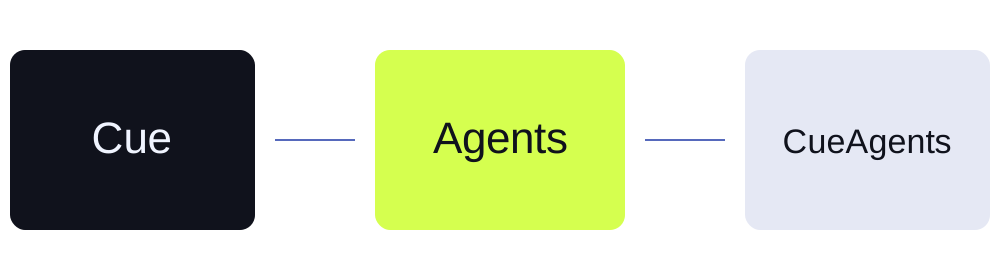
“Cue the agents” reads as an instruction. CueAgents reads as the organisation or platform that makes that instruction useful. That relationship gives a founder a simple starting sentence: “CueAgents coordinates AI agents around your workflows.” It is an illustrative positioning line, not a description of a product operating on this site.
The preferred casing is CueAgents. It preserves the two familiar words without spacing the domain itself. Cue Agents is useful in explanatory prose. There are nine letters before .com, with no hyphen or extra qualifier.
Agents can refer to a group of specialised roles or to a catalogue of capabilities available when needed. The name therefore fits more than a single conversational assistant. A company could begin with one workflow and later add research, service or operations capabilities under the same identity.
The plural does not require every product to use a multi-agent architecture. A simpler workflow may be the better engineering choice. The name creates room for multiple roles without prescribing how every task must be implemented.
CueAgents.com carries the whole name without an extra word. It can be the home for the company story, developer documentation, product family and contact channels. Consistent use of CueAgents and the canonical .com would help people identify the intended site.
Owning the domain does not establish trademark rights, prevent other spellings or extensions, or guarantee a search position. A prospective buyer should assess the intended business and existing rights independently.
See how the name translates into work ↗